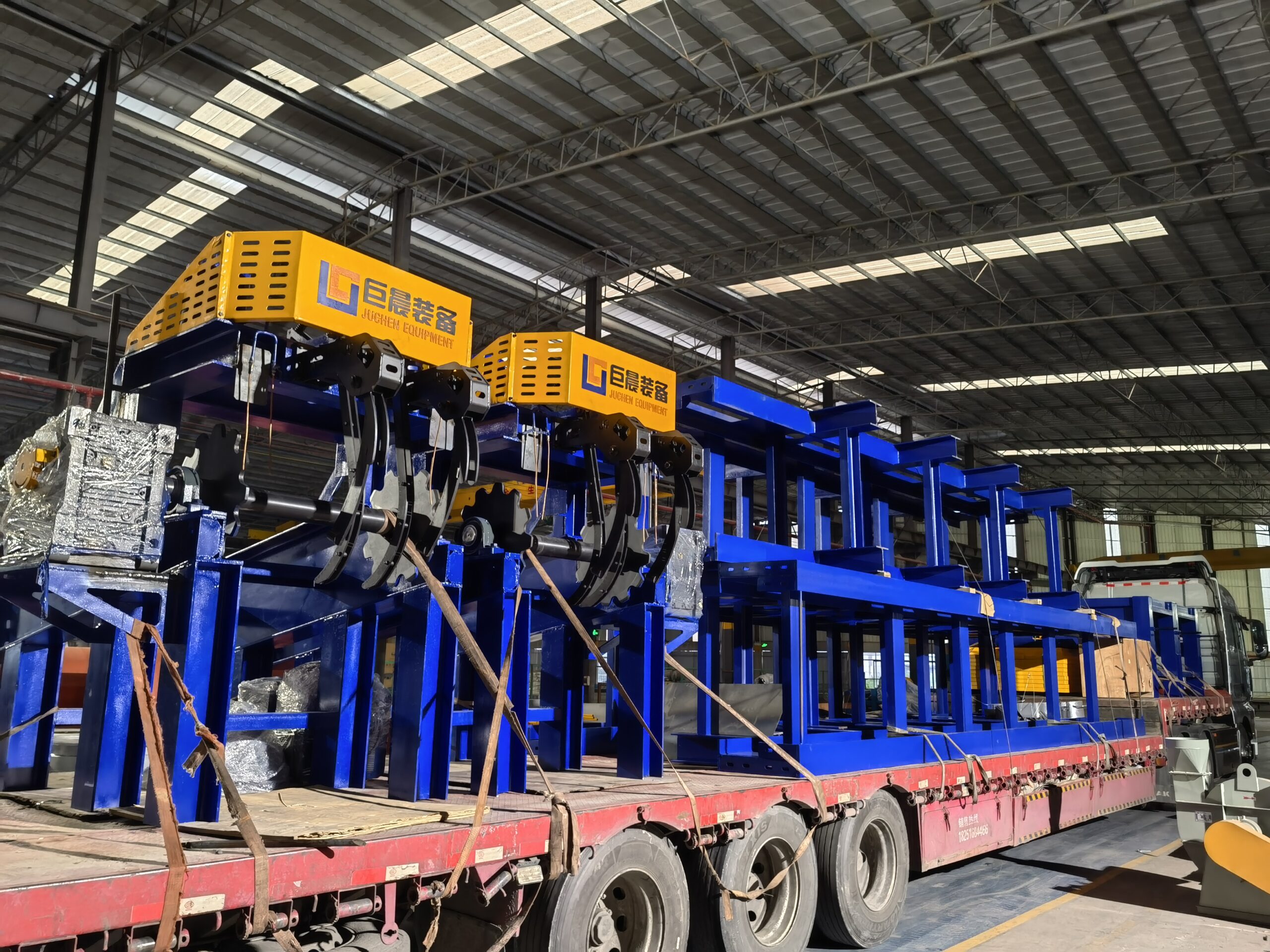
Welcome to Guangdong Juchen Equipment Technology Co.,Ltd.Our company is located in Nanhai District,Foshan City,Guangdoing Provinde.Guangdong Juchen Equipment Technology Co., Ltd.’s “aluminum melting furnace systems” are among its core product lines, offering highly efficient and energy-saving melting solutions for the aluminum processing and secondary aluminum industries.These systems are designed to achieve low metal loss,reduced energy consumption,high melting speed, and precise control of alloy composition.They are typically paired with the company’s high-efficiency energy-saving regenerative combustion systems to maximise thermal utilisation.
In Juchen Group,we have over 16 years profession dedication,design,manufacturing,installation,and retrofitting of smart melting and casting equipment in the aluminum processing industry.
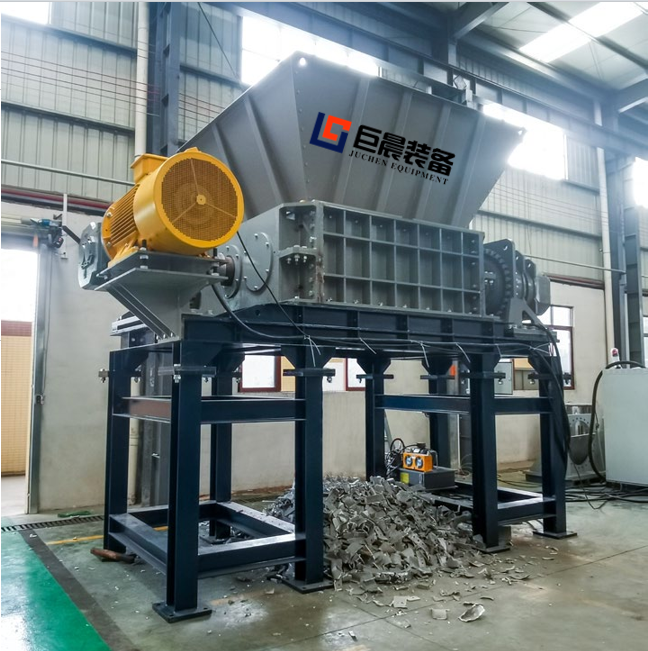
Product Introduction
In the global metal recycling and regeneration field,we offers vertical/horizontal hammer crushers,vertical crushers,single-shaft/double-shaft crushers,600hp professional design and manufacturing of heavy-duty metal shredders,metal grinding drums and other products.We can also customize and produce automotive crushing and recycling lines,scrap iron crushing and sorting lines,scrap aluminum crushing and sorting lines,waste household appliance crushing and sorting lines,etc.according to customer requirements.
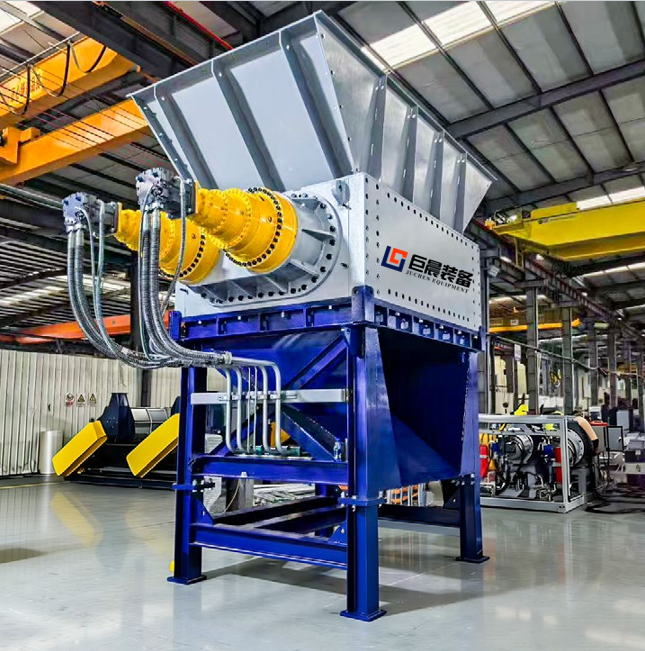
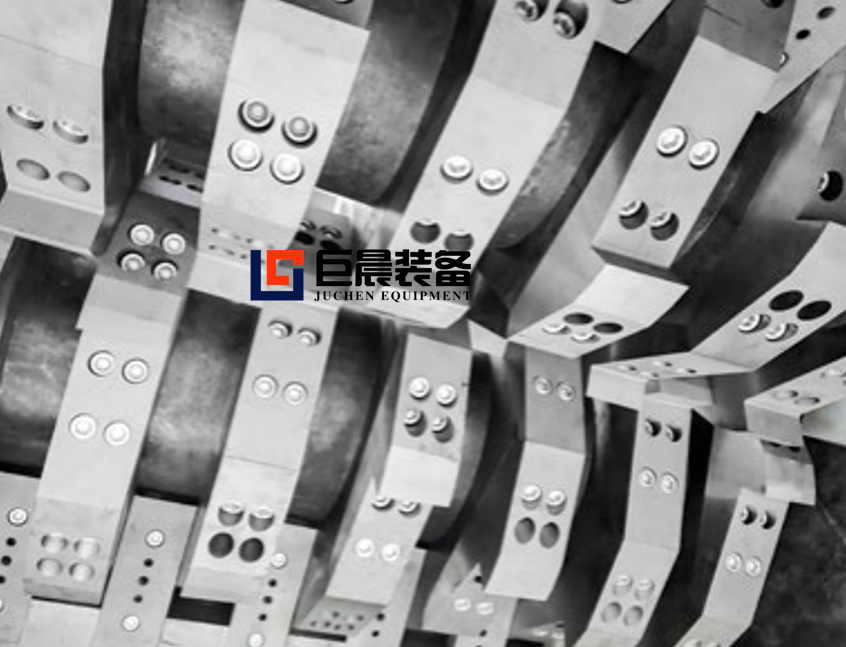
Shredder vs. Crusher: Key Differences
Shredder and Crusher are two common types of industrial size reduction equipment. Although both aim to reduce large materials into smaller pieces, they differ fundamentally in working principle, applicable materials, and output characteristics.
Deeper Understanding & Selection Guide
1. Why is there such a difference? (Physical principles)
This stems from different applications of material mechanics.
Shredder (shearing force)
– best for ductile materials. If you try to shatter a plastic film with impact, it will only deform or wrap around the machine. Only shearing – like using scissors – can effectively cut it.
Crusher (impact force)
– best for brittle materials. When high speed rotating blades or hammers strike hard plastic, the material fractures along stress lines, producing uniform granules.
2. How to choose?
Your choice depends on your material characteristics and final requirements:
Choose a Shredder if your material is: baled film, large tyres, scrap cars, bulky wood, or samples that need to be destroyed for confidentiality.
Choose a Crusher if your material is: already pre-shredded flakes, injection-moulding sprue/runner material, rigid pipe fragments – and you need a fine, uniform granule size.
Optimal solution: In many modern recycling lines, the two are used together in a two-stage process: Shredder for primary rough-cutting + Crusher for secondary fine-grinding – achieving the best balance of efficiency and product quality.
3. Terminology note: Crusher vs. Granulator
Be aware that in different regions and among different manufacturers, the terms “Crusher” and “Granulator” are sometimes used interchangeably. Generally speaking, a Granulator refers to the high speed, secondary crushing machine that produces fine, uniform particles. Therefore, when purchasing, pay more attention to the working principle and output particle size than to the name alone.
Our company product can install the CMS system on different devices.The CMS is an industrial interconnection PaaS platform that provides customers with overall olutions for intelligent equipment systems and assists in the digital transformation and upgrading of users in the non-ferrous metal industry.It also can improve enterprise production efficiency.It is very convenient to use.The CMS system can provide web publishing and mobile apps that can be accessed anytime and anywhere through computers,tablets,and mobile phones.And it can integrate custom multilingual tools,allowing for the free addition of new languages,making it easy to switch between multiple languages.
Shredder and Crusher are not substitutes; they are complementary. One tackles the tough, bulky materials (the “pioneer”), while the other delivers a high-quality, uniform product (the “perfectionist”). Using them in tandem often yields the best results.