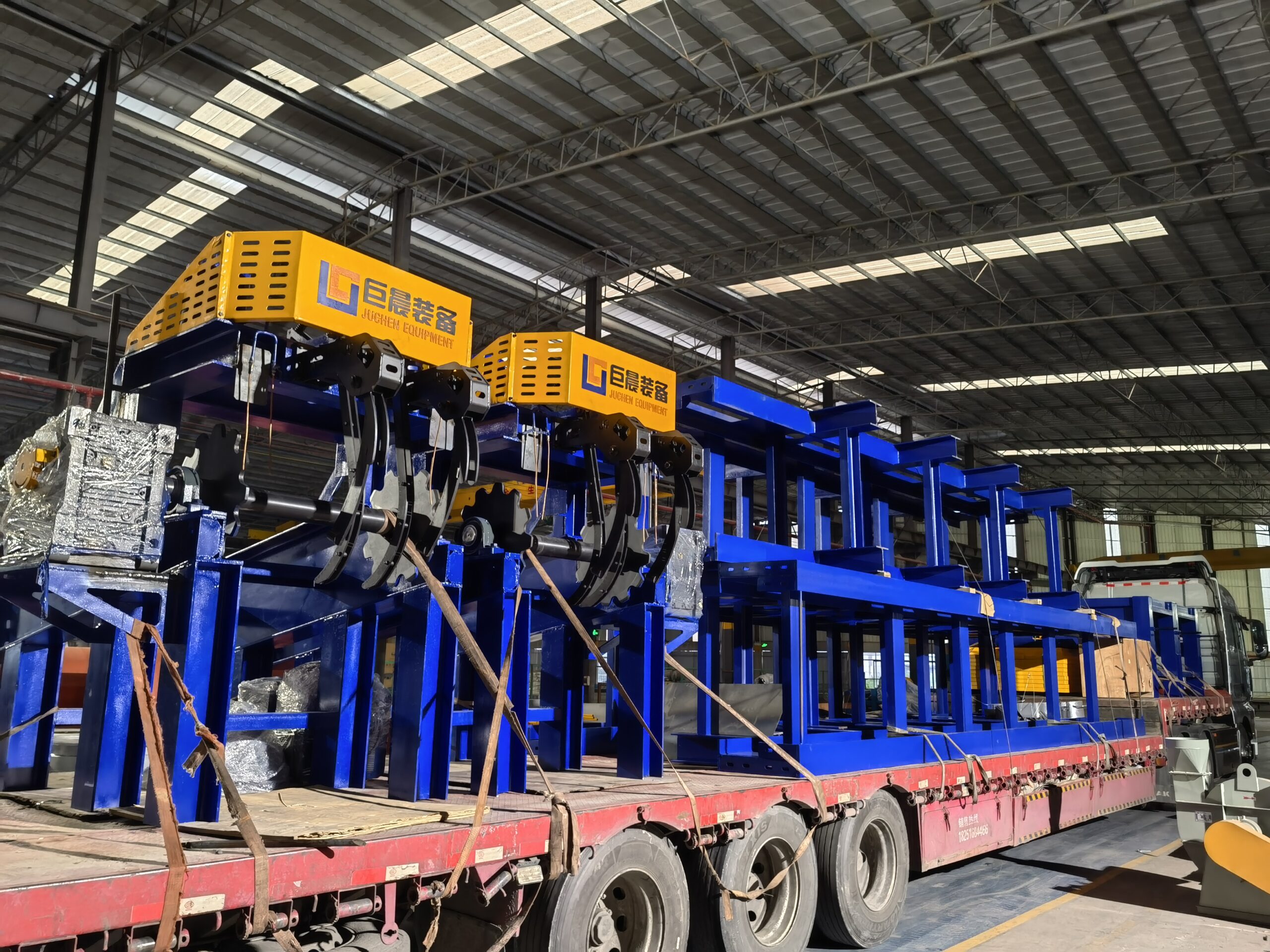
Welcome to Guangdong Juchen Equipment Technology Co.,Ltd.Guangdong Juchen Equipment Technology Co., Ltd.’s “aluminum melting furnace systems” are among its core product lines,offering highly efficient and energy-saving melting solutions for the aluminum processing and secondary aluminum industries.These systems are designed to achieve low metal loss,reduced energy consumption, high melting speed,and precise control of alloy composition.They are typically paired with the company’s high-efficiency energy-saving regenerative combustion systems to maximise thermal utilisation.
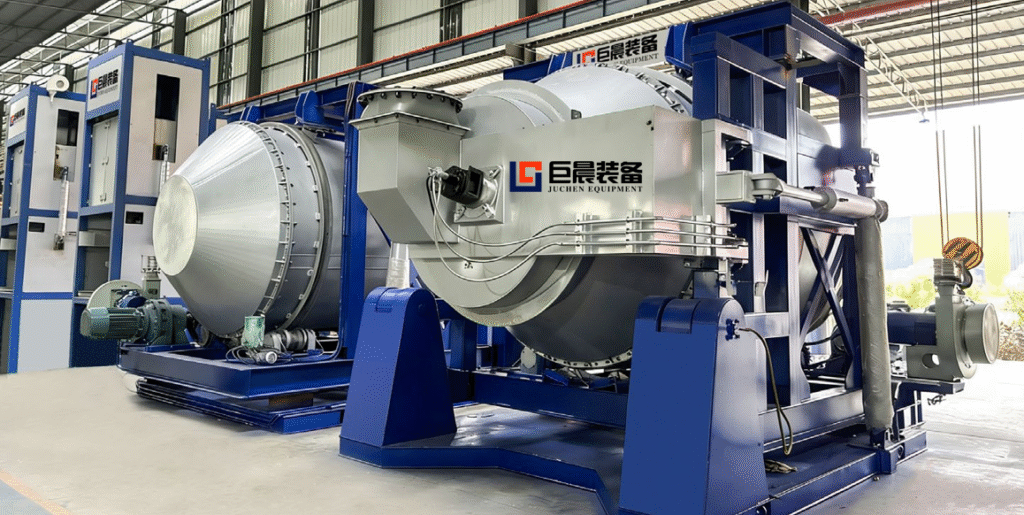
Rotary furnace,also known as a rotary kiln,is a widely used thermal processing device in industrial applications.It is primarily employed for high-temperature treatments such as calcination,roasting,or drying of granular and powdered materials.
Product Introduction
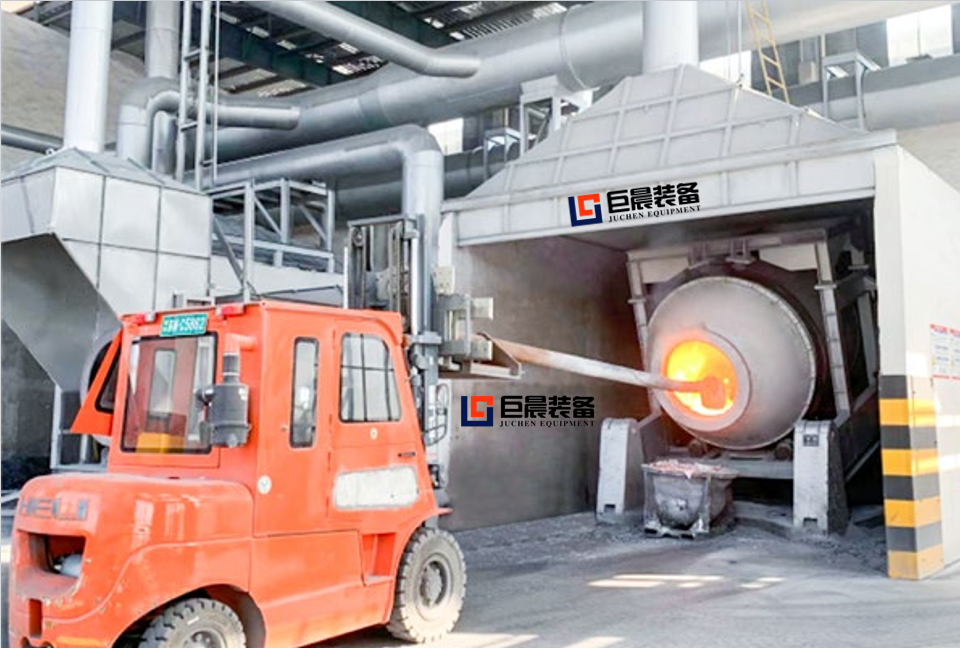
- Rotary furnace for heat treatment furnace in professional slag rake,stirring by rotating the rotary furnace the combustion of aluminum dross resulting in high temperature(occasionally and harmonic agent),in order to improve the aluminum melting rate and aluminum water temperature,water viscosity of aluminum.
- Aluminum water and aluminum dross peel,achieve two recycling aluminum slag aluminum water after precipitation aluminum in water,can make the aluminum content in the aluminum slag dropped to below 15%.
- The product stable performance,simple structure,mechanization,low labor intensity of operation,strong processing ability,aluminum recovery rate is high,the advantages of dust concentration.
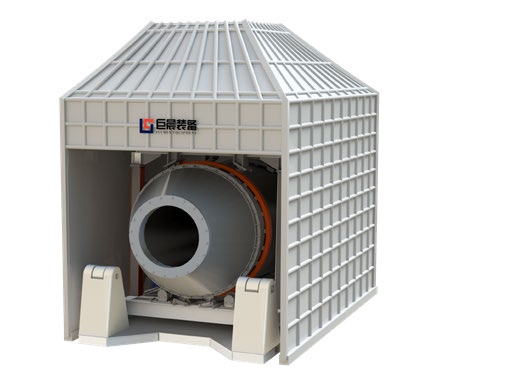
Core Structure of Rotary Furnace
Shell:
– A long cylindrical shell made of rolled steel plates,lined with refractory materials on the inside.
Support and Drive:
– The shell is supported by several pairs of tyres and rollers,with an inclination of 3–6%.It is driven by an electric motor through a gear train to rotate slowly.
Inlet and Outlet System:
– Material is fed from the higher (rear) end and,due to rotation and gravity,moves towards the lower (front) discharge end.
Working Process of Rotary Furnace
Material Movement:
– As the shell rotates,the material is carried up to a certain height and then falls back, creating a continuous “tumbling” motion.Because of the inclination,the material gradually moves from the feed end to the discharge end.
Heat Exchange:
– Heat from the source (e.g., a burner or electric heaters) is transferred to the tumbling material via radiation (from the flame and hot refractory),convection (via hot gas flow),and conduction (through contact with the heated shell).
Process Reactions:
– Under precisely controlled temperatures,the material undergoes the intended processes-drying, calcination,roasting,sintering,or melting.
Advantages and Limitations of Rotary Furnace
Advantages:
High throughput:
– Suitable for large-scale,continuous industrial production.
Wide material adaptability:
– Can handle various forms such as granules and powders.
Relatively high thermal efficiency:
– The dynamic tumbling ensures good contact between the material and the heating medium, leading to effective heat exchange.
Good process controllability:
– Temperature, rotation speed, and atmosphere can be precisely adjusted.
Limitations:
Temperature control precision:
– In large traditional units, temperature gradients may exist across the shell.
Sealing challenges:
– Achieving a perfect seal and precise atmosphere control can be difficult.
Large equipment footprint:
– Most units are massive, requiring significant capital investment and floor space.
Our company product can install the CMS system on different devices.The CMS is an industrial interconnection PaaS platform that provides customers with overall olutions for intelligent equipment systems and assists in the digital transformation and upgrading of users in the non-ferrous metal industry.It is very convenient to use.The CMS system can provide web publishing and mobile apps that can be accessed anytime and anywhere through computers,tablets,and mobile phones.
In summary, the rotary furnace is a mature, powerful thermal processing workhorse that plays a vital role in modern industrial systems.